Tesla Robotaxi
- 4.8
- Rating
- 10.00K
- Installs
- Free
- Price

 Analysis by App-foxy
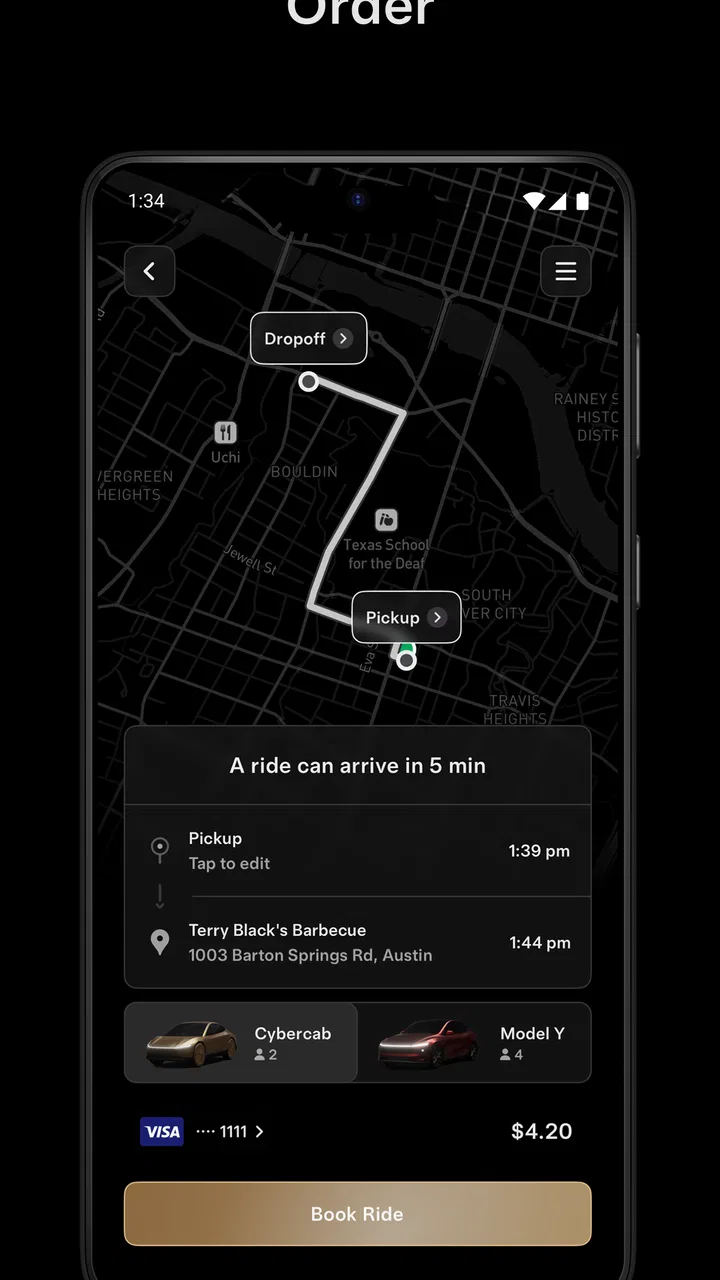
I approached Tesla Robotaxi as a practical Maps & Navigation app rather than treating the short “autonomous ride service” label as a complete explanation. The first thing I noticed is that this is a focused tool: it is built around Tesla’s robotaxi concept, not around the broad collection of maps, traffic layers, saved places, transit information, and route-planning options that I normally expect from a traditional navigation app.
That focus can be appealing if you are specifically interested in requesting or managing an autonomous ride through Tesla. It can also create confusion if you install it expecting a full replacement for your everyday map application. In my experience, the most important question is not whether the app looks polished in isolation, but whether it fits the exact part of a journey you want it to handle.
What the app is really useful for
Tesla, Inc. presents the app as a robotaxi service rather than a general-purpose map. That distinction matters. A conventional navigation app helps me decide how to travel, compare routes, inspect nearby businesses, and prepare for a trip. This app is more relevant when the ride itself is the center of the task.
You May Also Like

 AccuWeather: Weather Radar
AccuWeather Review: A Quick, Clear Forecast for Everyday Decisions
For everyday plans, the best forecast is the one you can understand quickly. AccuWeather makes rain timing, radar, and local conditions easy to act on, with a few trade-offs.

 Hill Climb Racing
Why Hill Climb Racing Still Turns Crashes Into One More Run
A tiny car, a bumpy hill and one more upgrade: Hill Climb Racing keeps resurfacing because its simple chaos makes every near-miss feel personal.

 AliExpress - Shopping App
AliExpress Makes Global Shopping Feel Personal, but Shoppers Bear the Risk
AliExpress turns a global marketplace into a pocket-sized discovery engine. Its reach is useful, its shopping loop compelling, and its trade-offs easy to miss.

 Lords Mobile: Kingdom Wars
Lords Mobile Is a Kingdom-Building Routine, Not a Quick Match
A case-by-case verdict on the building, battles, device demands, and social commitments that make Lords Mobile rewarding for some players and exhausting for others.

 PDF Scanner app - TapScanner
TapScanner Makes Paperwork Easier to Capture, Check, and Share
TapScanner makes scanning with a phone feel less like a rescue operation and more like a dependable step in getting work done. Its capture tools are useful, though not flawless.

 Block Blast!
 Shows How Much a Puzzle Game Can Leave Out
A quiet grid game shows why puzzle players increasingly value instant clarity, repeatable skill and low-pressure play—and where the genre still needs to catch up.
More From Our News Desk
View All News


For a person already curious about Tesla’s autonomous ride experience, that narrower purpose may be a strength. There is less temptation to dig through unrelated map features, and the app’s identity is easy to understand. For someone who simply needs turn-by-turn directions for their own car, bicycle, or walking route, I would stay with a mature navigation alternative instead.
A realistic everyday scenario would be planning a short trip before leaving work. I would open the app, check whether the service is usable for the intended journey, and keep my regular map app available for the surrounding details: the best entrance to a building, a backup route, a bus connection, or the exact walking path after arrival. That two-app workflow is not necessarily a flaw, but it is important to accept before relying on the robotaxi app alone.
The app is free, and its content rating is Everyone, which makes it approachable for a broad audience. Its current version is 26.4.5-7334. Those details make installation straightforward, but they do not remove the need to check whether the service fits the trip I have in mind. A free download is useful only if it helps with the actual journey rather than adding another step.
Where people are likely to get stuck
The biggest source of friction is probably expectation. The name can make people assume that the app works like a normal ride-hailing application, while the autonomous-service angle suggests a more specific experience. I would not begin by tapping around randomly. I would first decide whether I am trying to arrange a ride, understand availability, or simply navigate to a destination. Mixing those goals can make the interface feel less clear than it really is.
Another common sticking point is treating a destination as the whole journey. With a robotaxi service, the useful result is not just a place name. I also need to think about where I will start, where I can safely meet the vehicle, and what I will do at the destination. If I am leaving a large building, a campus, or a busy shopping area, I should prepare a recognizable pickup point rather than assuming that any map pin will be equally convenient.
I also recommend checking the phone’s basic state before blaming the application. A weak connection, an overloaded device, or an outdated installation can make a location-based experience appear unresponsive. The practical lesson is simple: troubleshoot the environment first, then the app. Repeatedly closing and reopening it without checking the connection usually wastes time.
Because the store shows an average rating of 4.6 from around 97 ratings, the early response looks encouraging, but I would treat that number as a signal rather than a guarantee. A small review pool can reflect a particular group of early users, and a positive score does not tell me whether the app suits my city, route, or travel habits. I would still test it on a non-urgent journey before depending on it for an important appointment.
Setup checks that save time
My preferred setup routine is deliberately boring. I install the latest available version, open the app while connected to a reliable network, and make sure the phone can determine its location. I then enter a simple destination that I know well. Familiar surroundings make it easier to recognize whether a problem comes from the app, the address, or the physical pickup area.
I would also confirm that the destination is written in a way a driverless service can use sensibly. A venue may have several entrances, and a large address may cover more than one practical meeting point. When possible, I would choose the entrance that is easiest to identify from the street rather than the one that is merely closest on a map.
Before starting a real trip, I would keep the phone charged and avoid switching aggressively between applications during the request process. That is a small habit, but it helps preserve context. If I need to consult a separate map for walking directions, I would do that before requesting the ride or after the destination is confirmed, not while repeatedly changing the main trip details.
There is also a useful distinction between app readiness and service readiness. A successful installation proves that the software is on the phone; it does not automatically mean that every desired trip will be practical. I would check the journey at the time I intend to travel and keep a backup plan for situations where the service does not match my needs. That backup might be a conventional taxi, public transport, a personal vehicle, or a standard navigation app.
For families, the Everyone rating is reassuring from an age-label perspective, but I would still explain the process to younger passengers. A child may understand that the app arranges a ride without understanding where to wait or what to do if the planned pickup changes. The adult’s role remains important, especially for the first few trips.
Recovering when a trip does not go as planned
When something fails, I use a short recovery sequence instead of repeating the same tap. First, I check whether the destination and pickup point are correct. Second, I verify the connection and location state. Third, I close and reopen the app if the screen appears stuck. If the issue remains, I restart the phone and try again only after confirming that the trip is still appropriate.
This sequence is useful because location problems are often misdiagnosed as application problems. A pin can be placed on the wrong side of a road, an entrance may be inaccessible, or the phone may have a stale position. Changing the pickup point by a small, sensible amount can reveal whether the original issue was geographic rather than technical.
I would avoid creating multiple requests simply because the first screen takes longer than expected. Duplicate actions can make the situation harder to understand and may leave me unsure which request is current. A better approach is to pause, check the visible status, and give the app a moment before trying a single controlled recovery step.
If the app closes unexpectedly, I would note what I was doing immediately beforehand: entering the destination, confirming the ride, switching applications, or moving through a weak-signal area. That detail helps separate a repeatable app issue from a one-off phone problem. I would also make sure there is enough free storage and that the operating system is behaving normally, since general device instability can affect any location-based service.
For an urgent trip, I would not keep troubleshooting indefinitely. The sensible recovery point is knowing when to switch to the backup plan. A robotaxi app is valuable when it reduces travel effort; it is not valuable if I spend the whole departure window trying to force a failed request through.
When the app is not the cause
Some disappointments come from the nature of autonomous ride services rather than from the application interface. The app may be installed correctly and still not be the right tool for a particular journey. A complicated pickup area, an unusual destination, or a trip that depends on several transport modes may be better handled by a conventional map and a separate ride option.
Weather, road works, temporary access restrictions, and crowded public spaces can also make a pickup less convenient. I would not judge the app solely by how smoothly it works from a quiet residential street. The real test is whether I can understand where to go and what to do when the environment is busy or unfamiliar.
There is a human factor too. Some passengers want detailed control over the route, the vehicle, or the exact handoff point. Others prefer to delegate the driving task and keep the process simple. This app is more attractive to the second group. If I feel uneasy without the broad controls and visible route choices offered by a traditional navigation tool, I would use Tesla Robotaxi as a specialized option rather than my only travel app.
It is also not the best choice for every accessibility need simply because a digital request is convenient. A passenger may require a particular type of assistance, extra space, or a carefully planned handoff. In that situation, I would confirm that the service suits the person and journey before making it the primary plan. Convenience should not replace practical preparation.
How it compares with ordinary navigation apps
Google Maps, Apple Maps, and similar tools remain stronger for broad trip planning. They are designed around roads, walking paths, public transport, business information, and alternative routes. If I want to compare a train with a car, locate a shop, or inspect the final walk to a building, those apps are usually the more complete starting point.
Tesla Robotaxi has a different value proposition. Its appeal is not the number of map layers; it is the possibility of using a Tesla autonomous ride service through a dedicated app. That makes the comparison less about which application has the prettier map and more about whether I need navigation information or a focused ride experience.
My practical compromise is to use the conventional map for orientation and the Tesla app for the part of the journey it is designed to manage. I would save the destination in my usual map tool, identify the correct entrance, and then use the robotaxi app with that context in mind. This reduces the risk of arriving at a broad address without knowing where I actually need to stand.
The trade-off is extra mental overhead. Two apps can offer better coverage than one, but switching between them is less convenient than having everything in a single place. For short, familiar trips, the dedicated approach may feel refreshingly direct. For complicated travel days, the broader navigation app is likely to remain indispensable.
Who should try it first
I think the best early users are people who are genuinely interested in Tesla’s autonomous ride service and are willing to test it gradually. Start with a familiar, non-urgent trip. Pay attention to the pickup instructions, the clarity of the destination, and how easily you can recover if something changes. That first test tells you more than a store score because it reflects your own surroundings and expectations.
The app may also suit Tesla enthusiasts who want a dedicated way to explore this part of the company’s ecosystem. Tesla, Inc. is the developer, and the product feels intentionally narrower than a general map. That specialization is useful when it matches the task, but it is not a reason to uninstall every other navigation tool on the phone.
I would be more cautious about recommending it as a first choice to someone who needs dependable, detailed trip planning every day. Commuters who compare several transport modes, travelers who need extensive offline preparation, and people who regularly navigate complex walking routes may find a standard map application more practical. The robotaxi focus does not replace those needs.
Likewise, anyone who cannot tolerate uncertainty during an important trip should test the app well in advance. A free service app can be worth trying, but a first experiment should not happen on the way to an airport, an exam, or a time-sensitive medical appointment. The right introduction is a low-pressure journey where a backup is easy.
Small habits that improve the experience
My first tip is to think in terms of meeting points, not just addresses. Before requesting a ride, I would look at the destination from the perspective of someone arriving there for the first time. Which entrance is visible? Is the road easy to reach? Will I recognize the spot without standing in the middle of a crowded area? This preparation can prevent a technically successful request from becoming an awkward arrival.
My second tip is to separate confirmation from exploration. I would settle the destination first, then consult the usual map app for surrounding details. Constantly changing the plan while trying to understand the service creates avoidable confusion. A stable request is easier to monitor than one that is repeatedly edited.
My third tip is to test a repeatable route at different times before forming a firm opinion. A journey that feels simple during a quiet afternoon may be less comfortable during a busy commute. I would record the practical parts that matter to me: how clear the pickup location is, whether the handoff is easy, and how much preparation I need. That personal record is more useful than assuming every trip will behave the same way.
Finally, I would keep the phone’s ordinary navigation option available. This is not a criticism of Tesla Robotaxi; it is sensible travel planning. If I need to walk the final stretch, find an alternate entrance, or explain my location to someone waiting for me, a broad map remains useful. The strongest setup is not necessarily one app doing everything, but each app handling the job it does best.
My practical verdict
After looking at the app through the lens of real travel rather than its brief store summary, I see Tesla Robotaxi as a specialized Maps & Navigation choice with a clear audience. It is free, rated for Everyone, and has attracted over 10K installs, while its 4.6 average suggests that many early users have found something worthwhile in the experience. I would still treat those figures as context, not as a substitute for testing it on my own routes.
The key decision is whether you want a dedicated autonomous ride experience or a complete everyday map. If the former is what you need, this app is worth trying carefully. If the latter is your priority, a conventional navigation application will probably remain the better main tool, with Tesla Robotaxi used only when its specific service makes sense.
My recommendation is to install it, prepare a familiar low-stakes journey, confirm the pickup point thoughtfully, and keep a backup available. That approach exposes the genuine strengths without pretending that every travel problem belongs inside one focused app. I would recommend it to curious Tesla users and passengers who value a direct robotaxi workflow; I would not recommend replacing a full navigation setup with it until it has proved reliable for the routes that matter most to you.
FAQs for Tesla Robotaxi
01What is the Tesla Robotaxi app and how does it work?
The Tesla Robotaxi app is designed to provide users with an autonomous ride-sharing experience. It allows users to summon a Tesla vehicle to their location for transportation without a driver. The app uses advanced AI and GPS technology to ensure efficient and safe rides, offering a glimpse into the future of autonomous travel.
02Is the Tesla Robotaxi app available for both Android and iOS?
Yes, the Tesla Robotaxi app is available for both Android and iOS platforms. Users can download it from the Google Play Store or Apple App Store. The app is optimized for both systems, ensuring a smooth user experience regardless of the device used.
03How does Tesla ensure the safety of passengers using Robotaxi?
Safety is a top priority for Tesla Robotaxi. The app integrates with Tesla's advanced autopilot systems, which include multiple cameras, ultrasonic sensors, and radar to navigate safely. Tesla continuously updates its software to enhance safety features, ensuring each ride is as secure as possible.
04What are the costs associated with using the Tesla Robotaxi service?
The costs for using Tesla Robotaxi vary based on distance and demand. The app provides an upfront estimate of the fare before the ride is booked. Tesla aims to offer competitive pricing compared to traditional ride-sharing services, making it an attractive option for frequent travelers.
05Can I schedule rides in advance with the Tesla Robotaxi app?
Yes, the Tesla Robotaxi app allows users to schedule rides in advance. This feature is particularly useful for planning trips to the airport or other time-sensitive destinations. Users can set pick-up and drop-off times, ensuring the Robotaxi arrives when needed.
Pros
- Innovative self-driving technology.
- Eco-friendly electric vehicle.
- User-friendly app interface.
- Efficient route optimization.
- 24/7 availability for rides.
Cons
- Requires stable internet connection.
- Limited availability in some regions.
- High upfront cost for users.
- Potential data privacy concerns.
- Dependency on software updates.

Tesla Robotaxi
Gallery